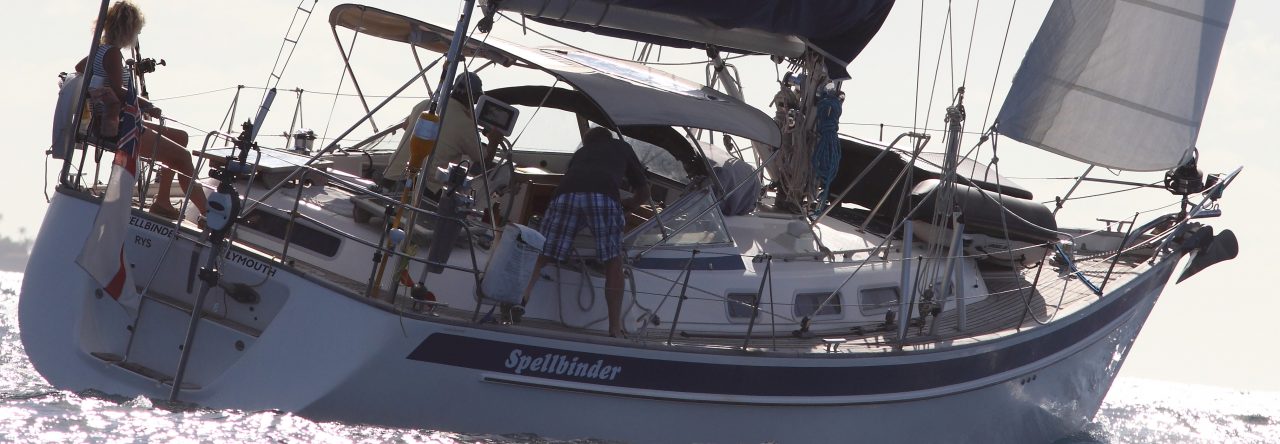
Having now been back a couple of weeks, I thought I would write a final post on what was an extraordinary and very fulfilling cruise to Arctic and Western Norway this year, in order to try and draw some conclusions.
I think any such reflection must start with the geography. A friend of mine described the Lofoten Islands as ‘like the Hebrides, but on steroids’. He was right.
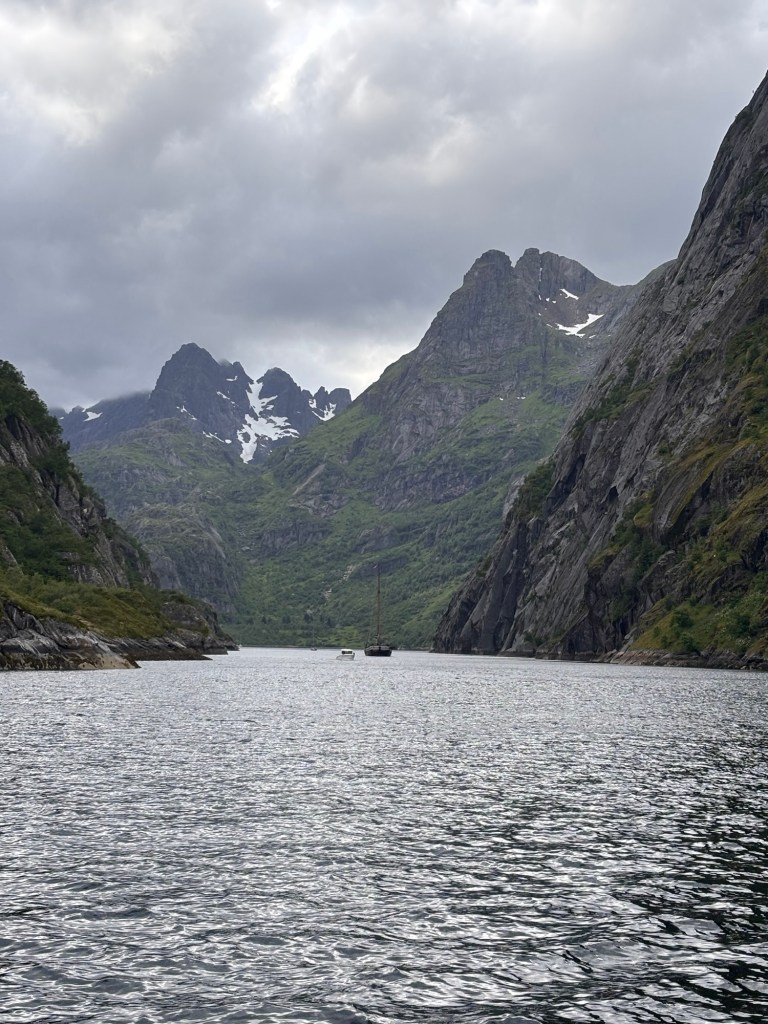
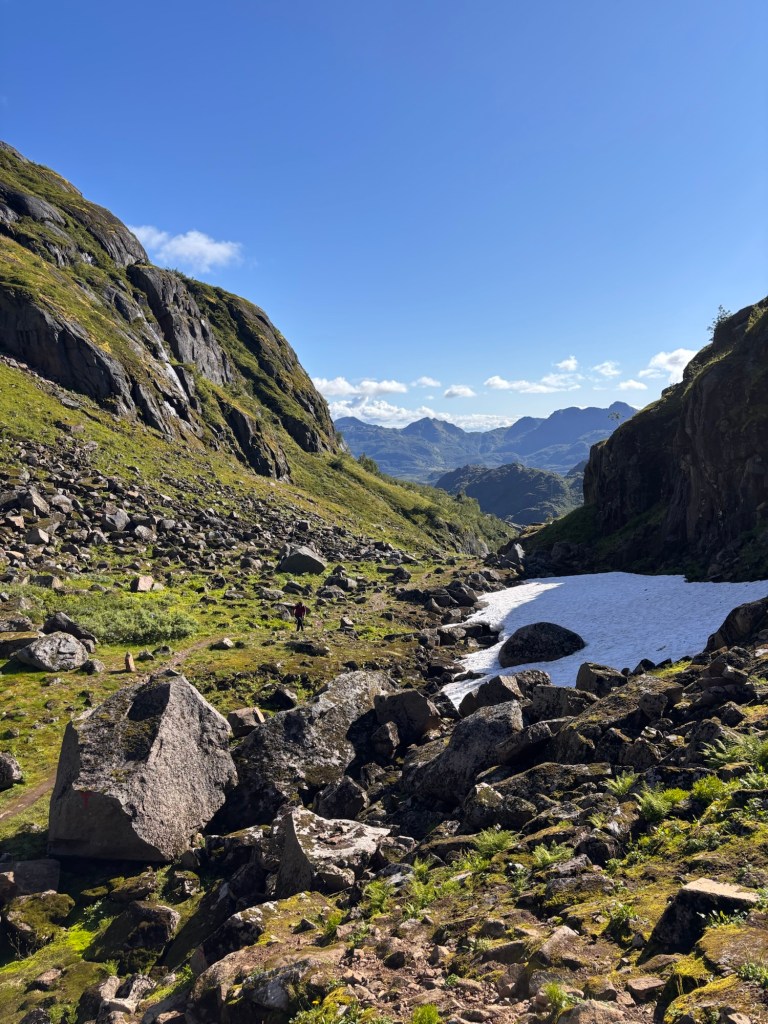
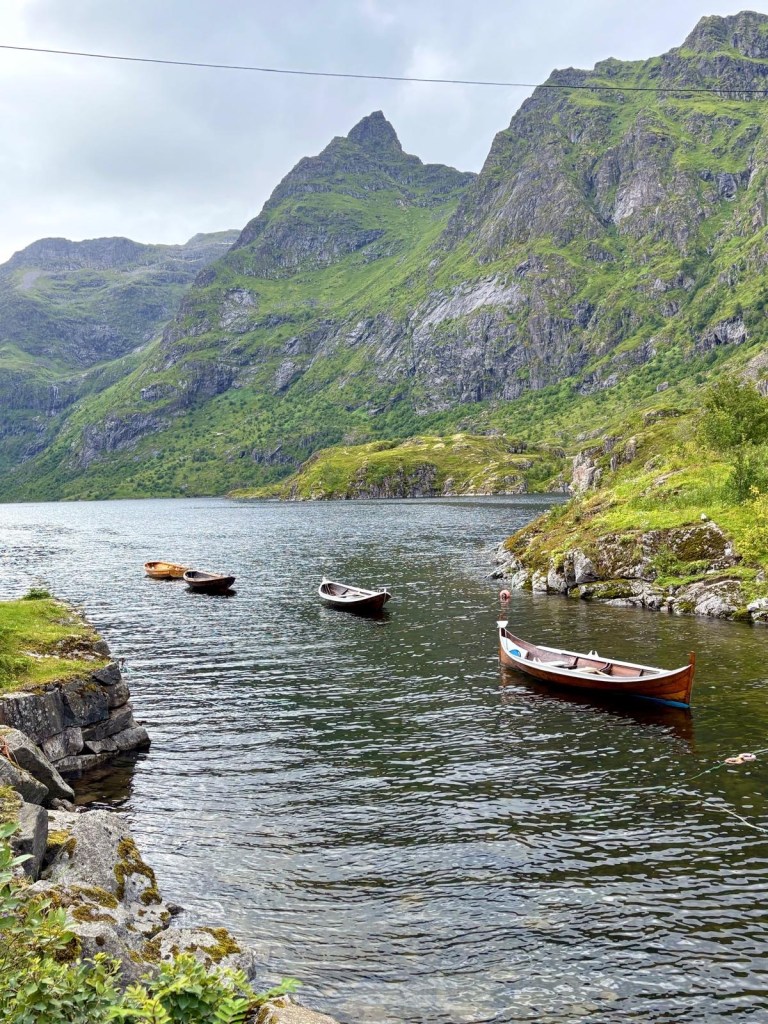
It’s the sheer scale: 120 miles of precipitous mountains, which plunge down into the Norwegian sea. There is nowhere I have been quite like it. They are no longer islands, technically, as Norwegian wealth has ensured a myriad of bridges, tunnels and other engineering work now makes them joined to the mainland and very accessible. But they are stunning, and make a fine place to cruise for a month.
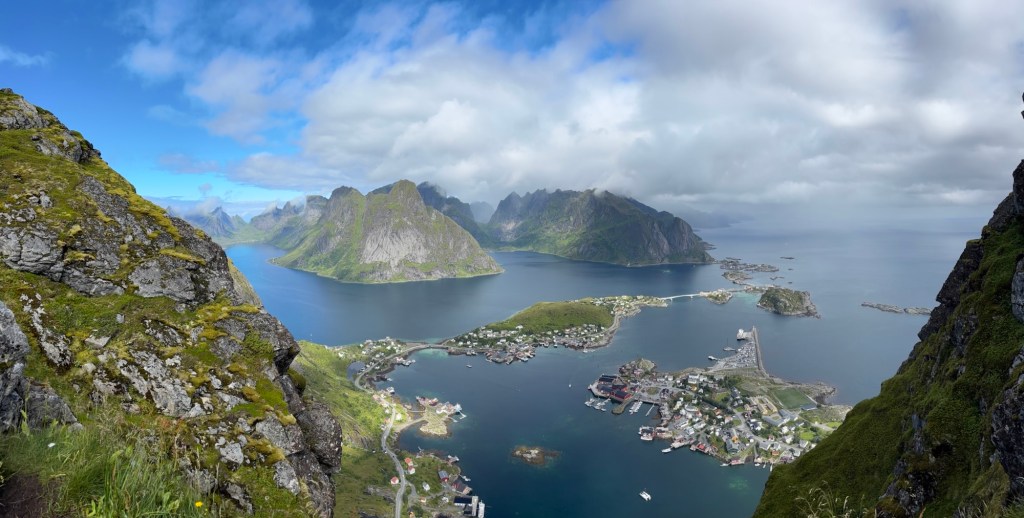
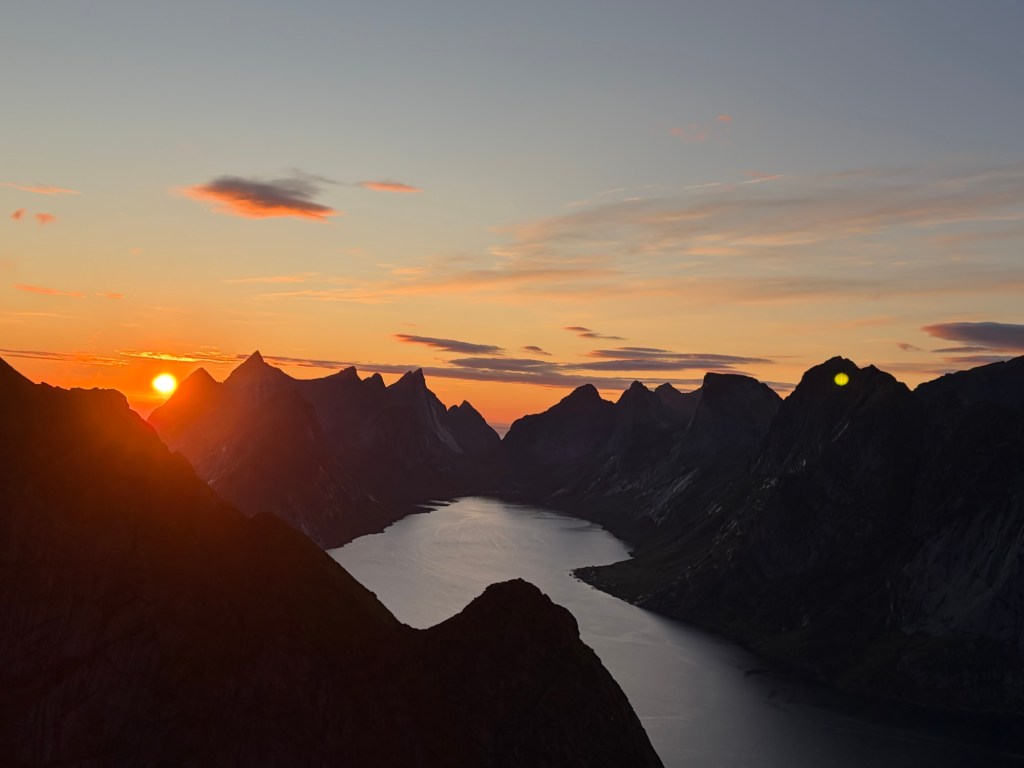
Reine (photos above and below) is one of the best places to view them.
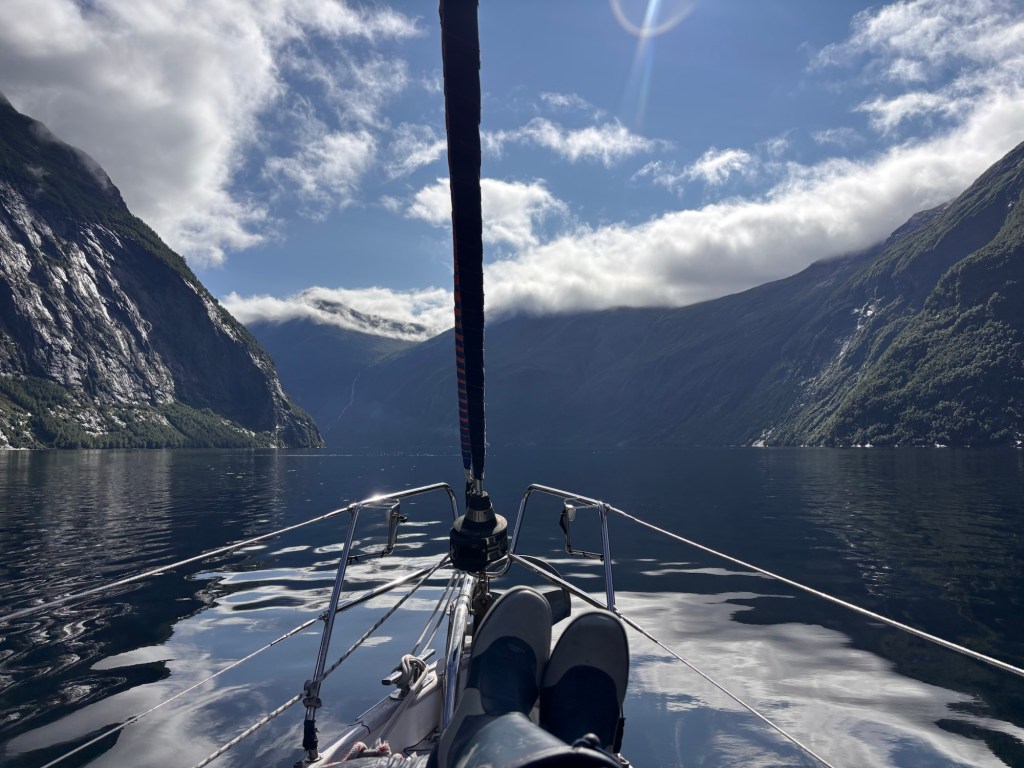
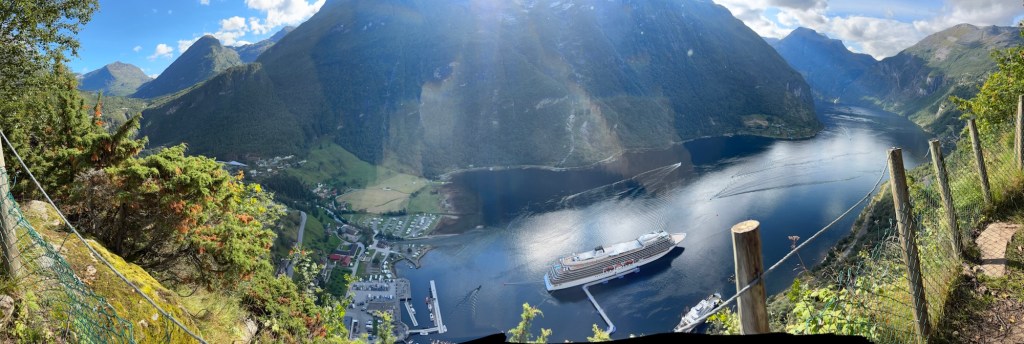
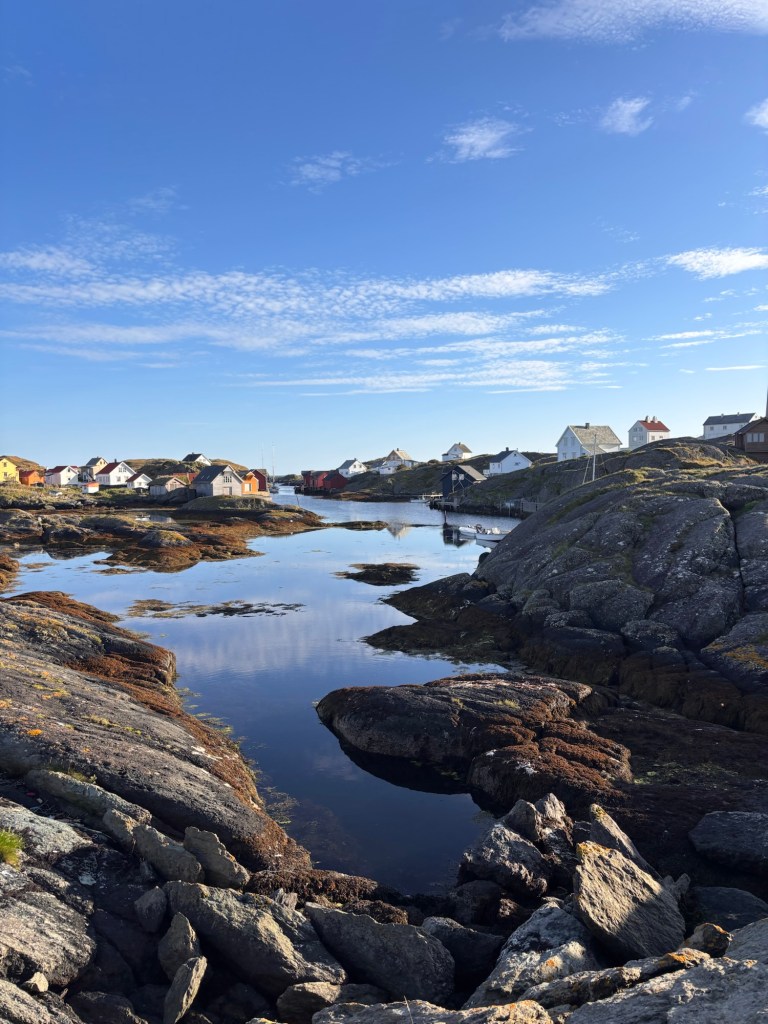
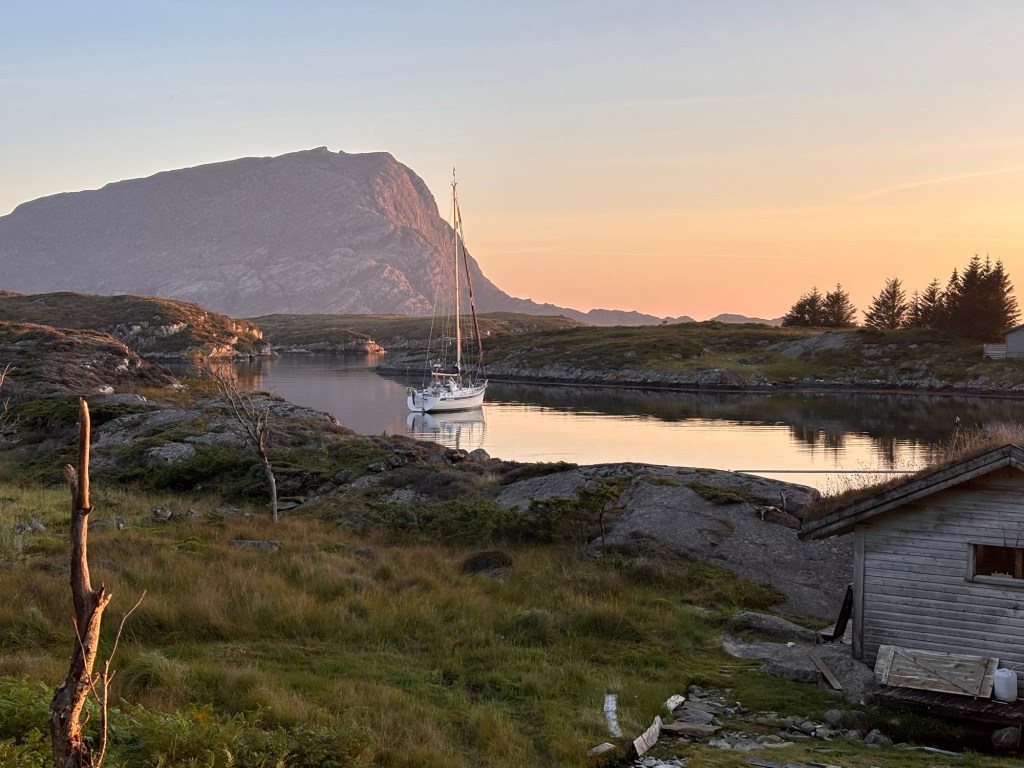
But of course there is more: the huge and lengthy fjords which curl into the mainland, and the many offshore islands are all delightful. Geirangerfjord stunned us, and we were pleased to have made the effort to go 50 nautical miles inland, spending 2 days to do so. Of the islands, Utvær (the most westerly inhabited place of Norway) was for me the highlight, although there were many other candidates.
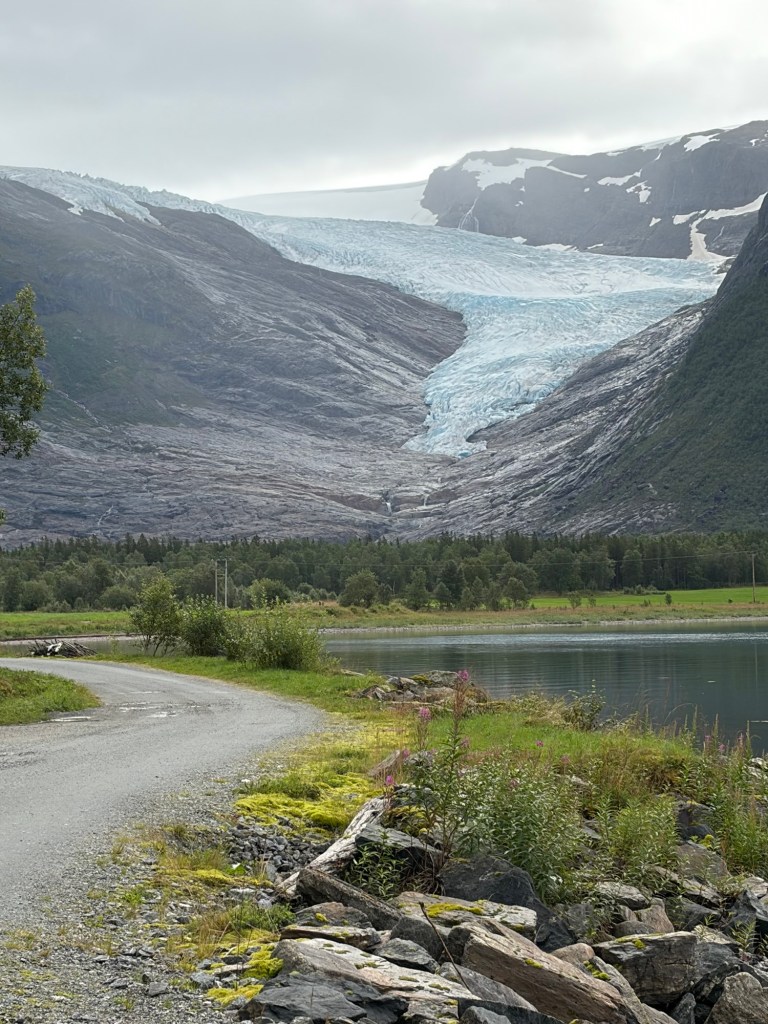
No geographical reflection would be complete without mention of our visit to Svartisen glacier: retreating quickly, it showcases how our climate is changing but remains a magnificent spectacle.
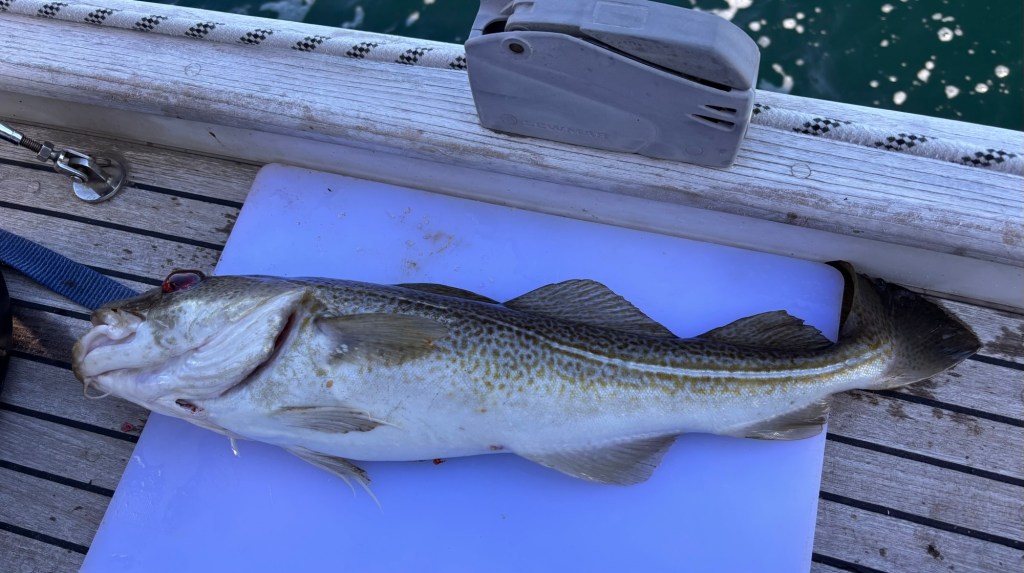
The wildlife was a big part of our trip: minke whales, sea eagles, eider ducks and a solitary otter were highlights. We caught many fish – cod, ling and saithe mainly. Up north it didn’t take long: an hour before supper and the line went out. We saw a few dolphins and porpoises, and were a bit late when we arrived at the puffin-inhabited islands (they had largely left and gone to sea – we saw more in Shetland).
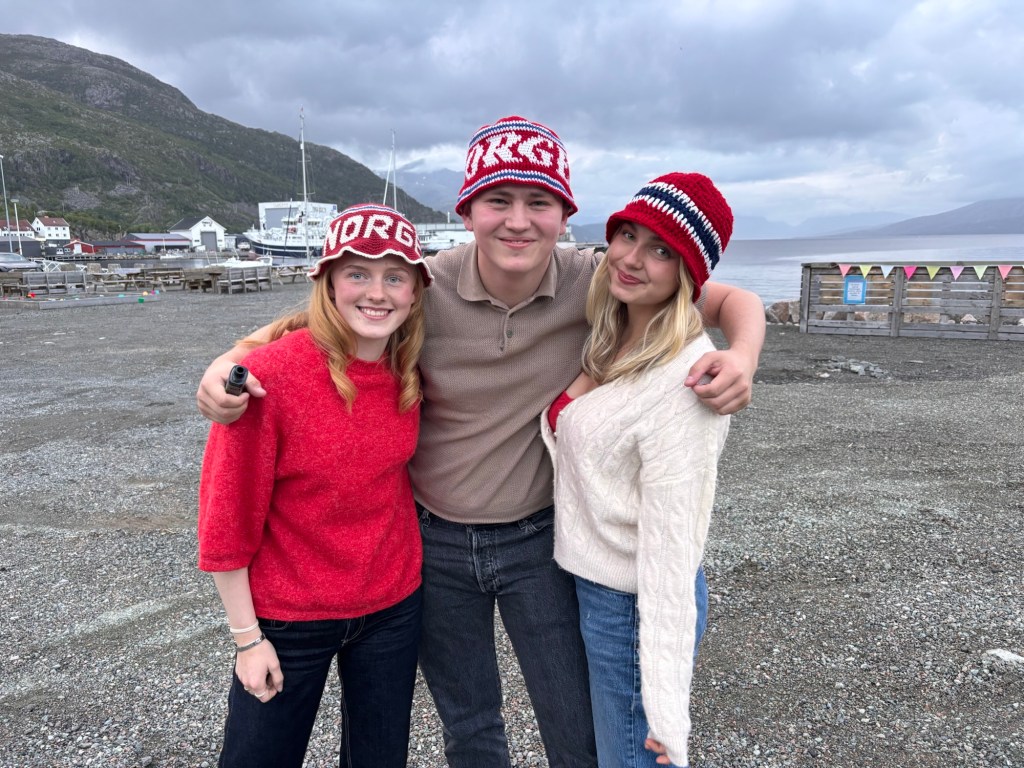
Now the people – we met many Norwegians. We Brits instinctively feel a kinship, perhaps owing to the amounts of Viking DNA which flows through our veins. Norwegians are a reserved, resilient and bold in nature. They shake off poor weather and dark winter nights with insouciance. Theirs is a country which has made the very best of its geological good fortune, and invested wisely for its future. People seem happy. The state is trusted, but all pervasive: taxes are high, but so is the perceived return on them. It’s a heady mix, and an attractive one.
The history too, was of interest: formally a young nation (1905) its history is intertwined with Sweden, and its royal heritage. We enjoyed visiting Trondheim cathedral. WWII, the German occupation and the British involvement was never far away; so too the Viking heritage, and fish industry, particularly the Lofoten cod one. It made for great interest at a cultural and historical level, and we learned a great deal.
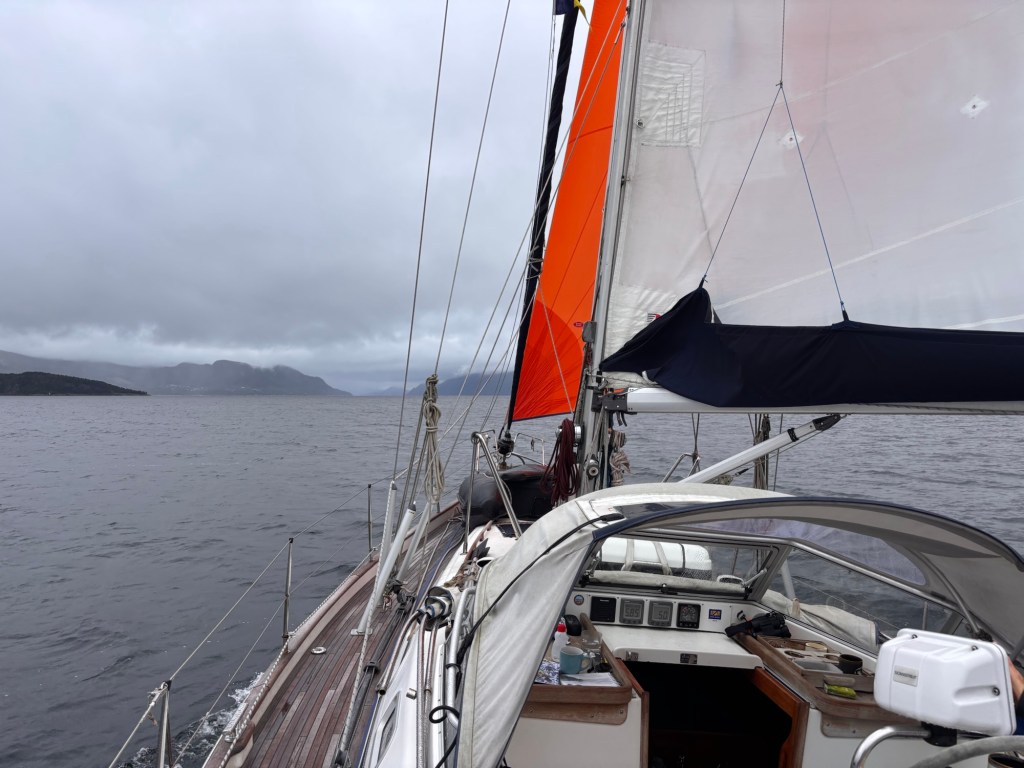
Finally, a word or two on the sailing and the practical side of cruising a yacht there. It should really be on every adventurous sailor’s itinerary. Once you get there, it’s relatively easy: the long inner lead largely protects you from the Norwegian Sea, providing a relatively protected way of cruising up and down the coast in the protection of the outer islands. The Norwegians also make it easy in terms of little pontoons everywhere, more often than not with shore power and water, at very modest cost. We anchored a bit, but didn’t even use the outboard, as we could row ashore easily.
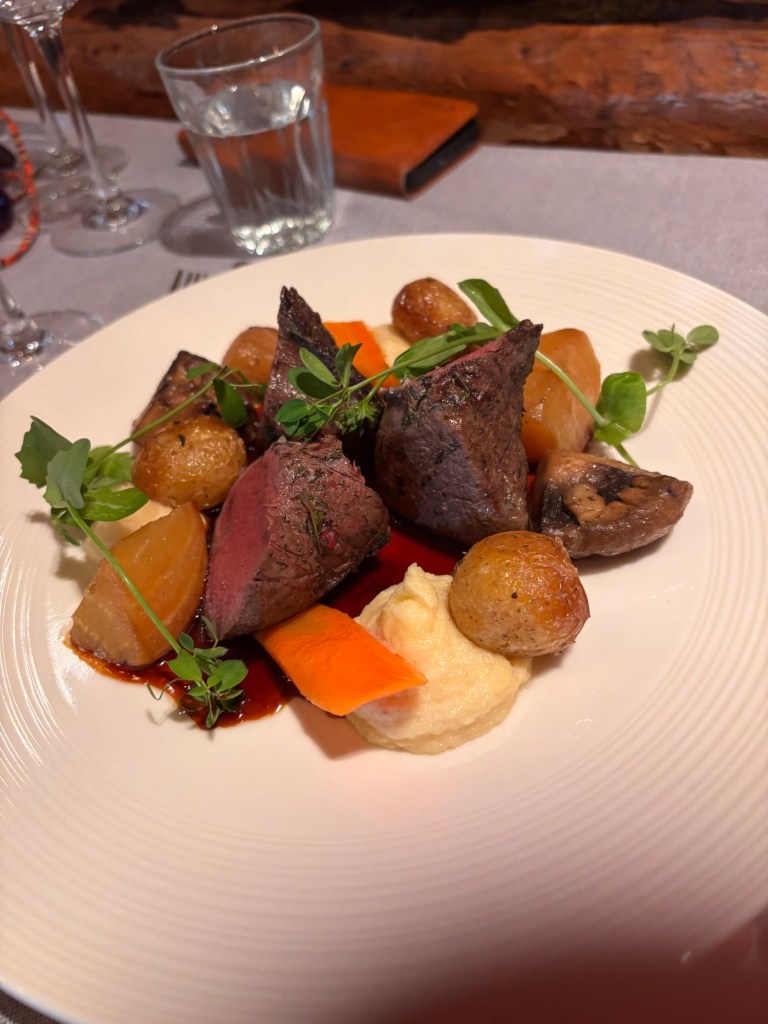
The cost of food, and particularly alcohol is significant: we brought extensive supplies, and were very glad we did so. Having a freezer on board is just so useful. That said, when we did eat out we loved it: dinners in Å, Svolvaer, Ålesund and Bergen stood out for me. We ate reindeer, smoked whale and dried cod; it was all delicious.
Internal transport was easy and modestly priced: the infrastructure generally was modern, and most things were simply booked by an app, or QR code. The weather was indifferent for us: 2025 had been a fine summer for northern Norway, but the locals thought this one was poor. We did get quite a lot of rain, and we used the bimini to keep most of it off. I wore a jumper most days, and we were glad of our reliable heater. But none of this mattered: the stunning and novel nature of it made the weather slightly irrelevant.
It was a very memorable cruise. We were fortunate in the weather on our passage up and back: 3 days from Suffolk to Shetland comprised mainly light following winds, and Tom and his crew had fair winds to Bodø, albeit rather wet ones. We sailed a lot of the main passage back from Bergen to Dover.
We’ll be back, I hope. Norway has so much to offer. I must give a final thank you to our many crew: Neil and Clare, to Tom and his friends for getting up to Narvik; to Paul and Rosie, Crispin and Lottie, Rupert and Rose, and to Jonty for crewing up and back. And finally to Sue, who sailed most of it with me: we walked much, to her satisfaction, I hope!


Nick, As another chapter closes I shall eagerly await the unveiling of your plan for 2027 and look forward to next year’s travelog. A fabulous expedition so charmingly shared with this armchair sailor and your other fans!
LikeLiked by 1 person
I enjoyed reading your reflections very much – they definitely resonated strongly. A wonderful trip and delighted to have had the opportunity to join you for part of it!
LikeLiked by 1 person
A great sign off to an extraordinary cruise – I’ve thoroughly enjoyed following!
LikeLiked by 1 person